Optimizing Grinding Performance in a Lead-Zinc Processing Plant
1. Project Background
Iron ore beneficiation plants rely on grinding processes to reduce ore particle size and achieve the required mineral liberation.
Grinding media selection is particularly important because it affects grinding efficiency, steel consumption, and the operating costs of mineral processing plants.
1. Project Background
Lead-zinc ores often contain multiple valuable minerals that must be separated through carefully controlled mineral processing operations.
Grinding plays a critical role in this process because particle size distribution influences mineral liberation and subsequent flotation performance.
The Elura lead circuit operated by Pasminco Australia was examined in an engineering study investigating the relationship between laboratory testing and actual plant performance.
The processing circuit handled approximately 140 tonnes of lead-zinc ore per hour through a SAG mill and ball mill grinding system.
2. Technical Challenges
The main engineering challenge was to understand how laboratory grinding tests could accurately represent industrial grinding performance.
For lead-zinc processing plants, differences between laboratory and plant conditions may affect:
Grinding particle size distribution.
Mineral liberation.
Classification efficiency.
Flotation feed characteristics.
Overall processing performance.
3. Grinding Circuit Evaluation
The Elura operation used a SAG mill and ball mill circuit, with cyclone classification as part of the grinding process.
The engineering investigation examined plant operating data and compared laboratory observations with actual processing conditions.
This approach is important because grinding media selection should be evaluated in the context of the complete mineral processing circuit rather than based on laboratory hardness results alone.
4. Important Engineering Considerations
For lead-zinc processing operations, grinding media selection should consider:
Ball diameter: The appropriate diameter depends on the mill design, ore feed size, and grinding requirements.
Wear resistance: Grinding balls should maintain suitable dimensions and performance throughout their service life.
Hardness and toughness: A suitable balance is required to withstand the impact and abrasion conditions inside the mill.
Grinding consistency: Stable grinding conditions help maintain predictable feed characteristics for downstream flotation.
5. Grinding Media Recommendations
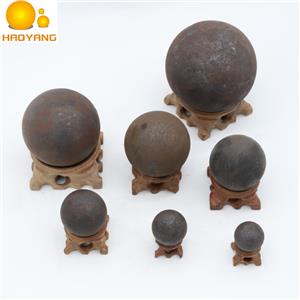
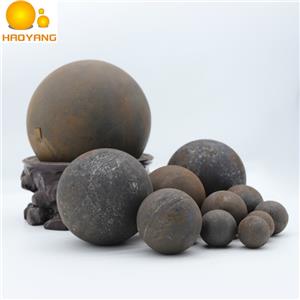
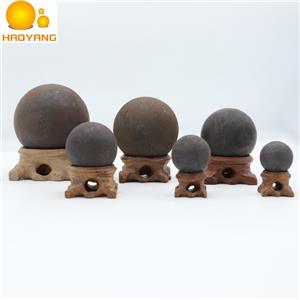
For lead-zinc concentrators using conventional ball mills, forged grinding steel balls can be evaluated according to the required grinding conditions.
Jinan Haoyang Casting & Forging Co., Ltd. supplies forged grinding balls for polymetallic ore processing, including lead-zinc applications.
Customers can provide their existing ball specifications, mill information, ore characteristics, and target hardness requirements for technical evaluation.
Conclusion
The Elura engineering study highlights the importance of connecting laboratory grinding results with actual plant performance. Understanding the complete grinding circuit can help mineral processing operators make better-informed grinding media decisions.